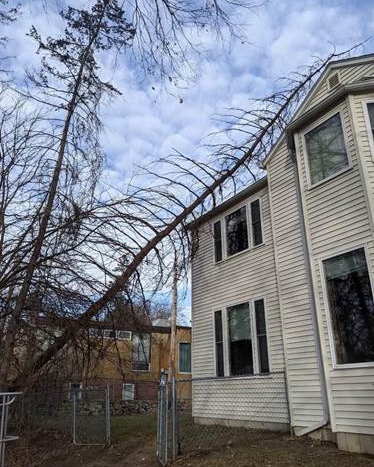
It is a dark, mid-December night. The sirens have sounded, and the meteorologist’s warnings are urgent. A tree has blown onto your home. You don’t have electricity, and the temperature in your home is starting to get cold. These are scary situations for many of us in our personal lives. Now imagine being in your late teens or early twenties, caring for 4 individuals in wheelchairs and with cognitive delays that don’t understand why they may need to seek shelter. This is the reality for the 24 properties that HCO manages.
This is the story of December 15, 2021…
The weather forecast for December 14th was typical for December in Southeast Minnesota, but promised unseasonable temperatures and brisk winds for the next day. The temperature in the Winona area on December 15th reached into the 60’s, prompting students to break out the shorts and frisbees. That night, “brisk” winds turned into straight-line winds of 50 to over 60 mph in Winona and across the river in Trempealeau. In Plainview, a tornado touched down with winds of 93 mph. A tornado also touched down in Wyattville, a few miles southeast of Lewiston, damaging farm buildings. In Trempealeau, a tornado caused trees to fall on houses. A semi-truck on I-90 south of Winona was blown over. A man in Rochester, stepping out to have a cigarette, was killed when a tree fell on him and his truck.
Luckily, in all this devastation, no one was killed in the Winona area – although many trees came down, tiles blew off roofs, sheet metal blew off outbuildings, electric lines were compromised, causing power outages, and people were camping out in their basements with their children and calling relatives and friends to make sure they were in a safe shelter.
For most people, the unprecedented winds meant securing things around the house, a few hours of lost sleep, and some clean-up of twigs and branches the next day. For some, power outages lasted several hours or even days. Then, business as usual.
For Home and Community Options, magnify storm preparedness at the house by 20-plus, and throw in a multi-story apartment building. Oh, let’s not forget that in those houses and apartments are some of the most fragile, intellectually, and sometimes physically challenged individuals living in the Winona area.
Planning to keep the individuals safe during a severe weather event takes more than saying, “everyone in the basement!” Each house presents its own challenges to storm preparations, as does each individual.
They need consistently available water, power, and staff to care for them. Staff must be able to get to the houses, and must remain calm while following HCO protocols to keep individuals safe. Plans must be made to have enough of the proper medications at hand. Individuals must be led to a safe location in the home, and staff must be able to address any mental health issues that may arise from natural fear of such a phenomenon. In the case of sudden loss of power, there must be back-up plans. Individuals on oxygen must have electricity.
Preparing for inclement weather for HCO employees starts well before the meteorologist forecasts are posted. Each program is required to have weather safety plans and protocols in place and staff feeling confident with the support that they are providing.
When HCO becomes aware of possible severe weather, teams work proactively together to address potential issues before they arise. Programs are notified of the possible impact of incoming weather. Supervisors adjust staffing to have additional support in place before roads get bad (or in case evacuations become necessary). Supplies are monitored and emergency items are tested (first aid kits, medications, and other items ready for evacuation, generators tested, etc.), and preparations are made to remind staff and individuals supported regarding safety protocols.
When a storm hits, Direct Support Professionals (DSP) and Supervisors provide guidance to the individuals as emergency authorities provide direction to take cover, etc. DSPs take care to provide comfort to those that are scared and may not understand what is happening. HCO Management, Supervisors, and the Maintenance Team are in constant communication with all programs to identify any locations that may need additional support.
When the storm subsides and it is once again safe to travel, Supervisors, Maintenance, and Program Directors work continuously to identify if any services need to be relocated or require immediate support. If concerns arise, they keep families and guardians up to date on the well-being of their loved ones. If a program needs to be relocated, a team is deployed to identify appropriate placement for each individual and make the move happen.
In the days following severe weather, we work through assessments, documentation, and clean-up. The Maintenance Team works closely with the Management Team to determine damage to the properties, and the Business Office starts the process of filing insurance claims. Vendors are secured to assist with such things as tree removal and building repairs. Directors and Supervisors file needed reporting to the County and the State, while program staff spend time making adjustments at alternative locations and dealing with household concerns, like refrigerators or freezers that have become the victims of power outages.
So, the next time the siren sounds and you are taking cover, remember the number of dedicated people at organizations like HCO who are going above and beyond to ensure those we serve are supported, safe, and healthy during the raging storm.